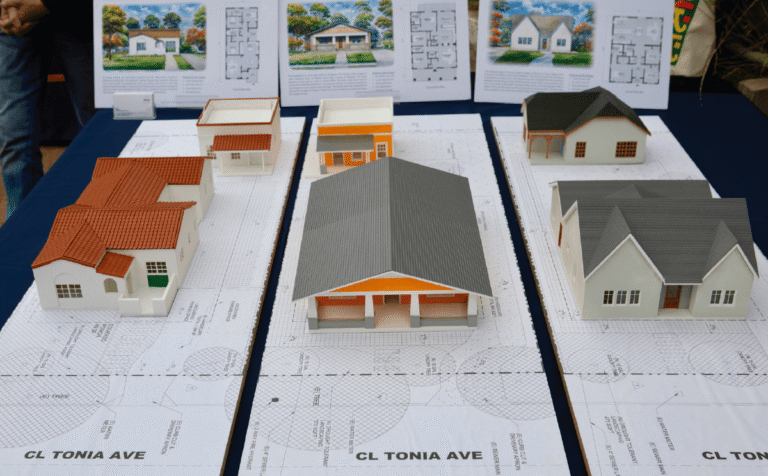
Nestled across Altadena’s Tonia Avenue, Eaton fire survivors toured two building sites touting a streamlined rebuilding process, after last year’s fire destroyed over 9,000 buildings and left more than 70% of Altadena’s families without permanent housing.
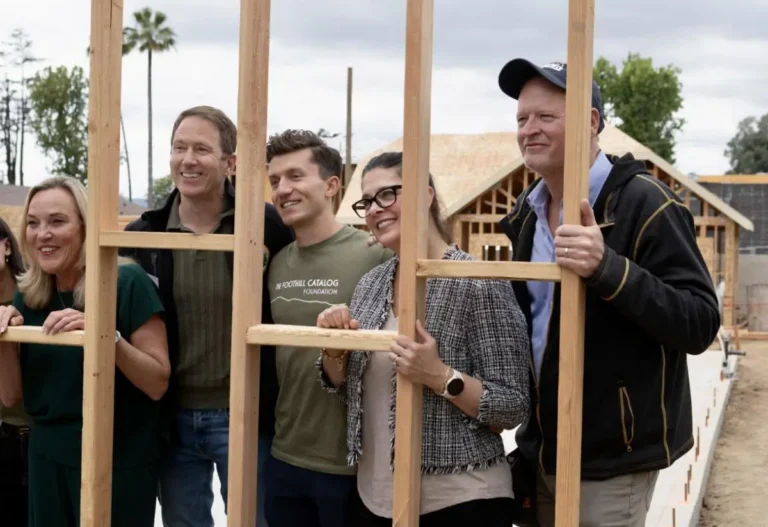
The Tonia Homes Initiative – a collaboration between the Foothill Catalog Foundation, Williams Rebuild and the Callahan Family Foundation – is what some Altadenans call a major milestone in closing the housing gap amid swaths of fire survivors’ major funding and housing insecurities.
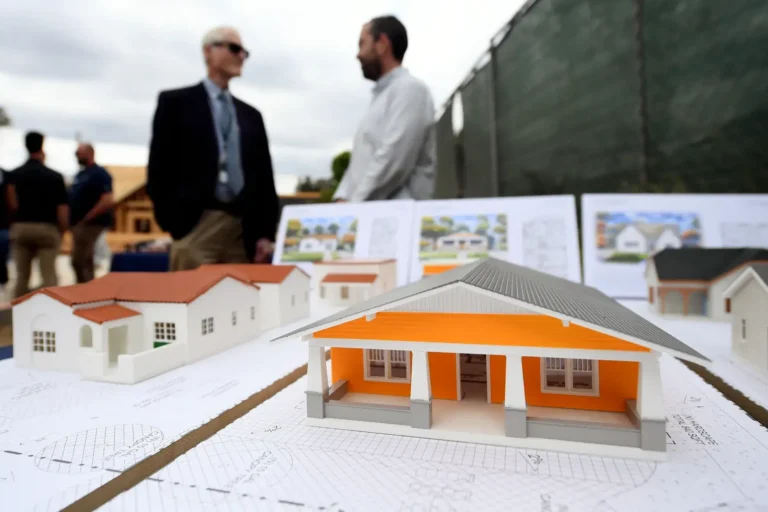
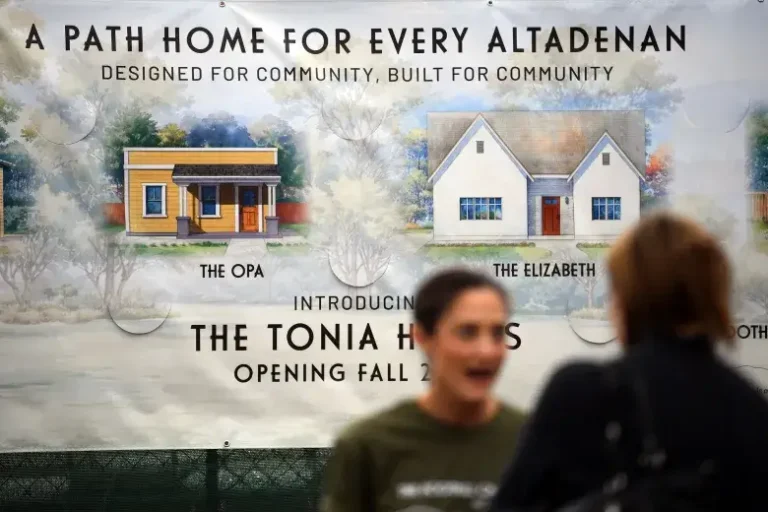
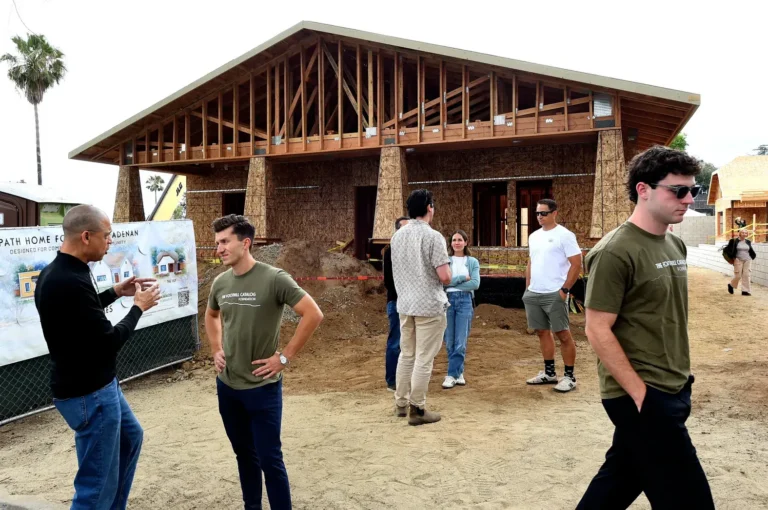
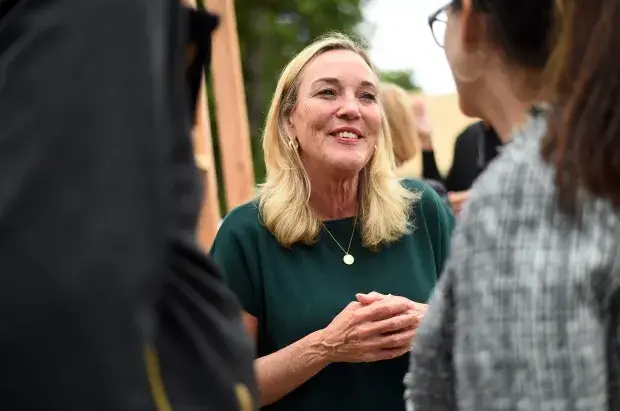
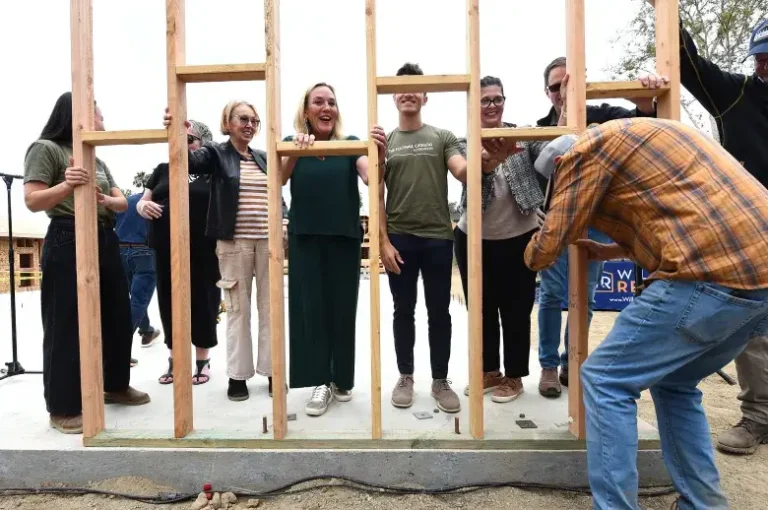
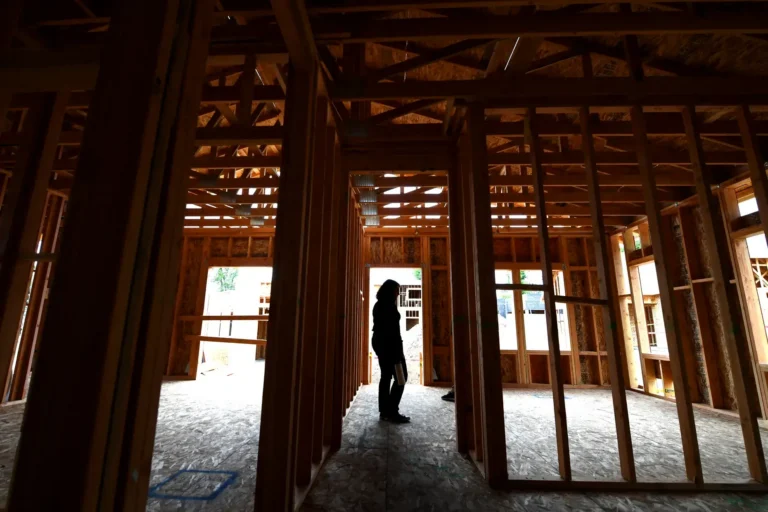
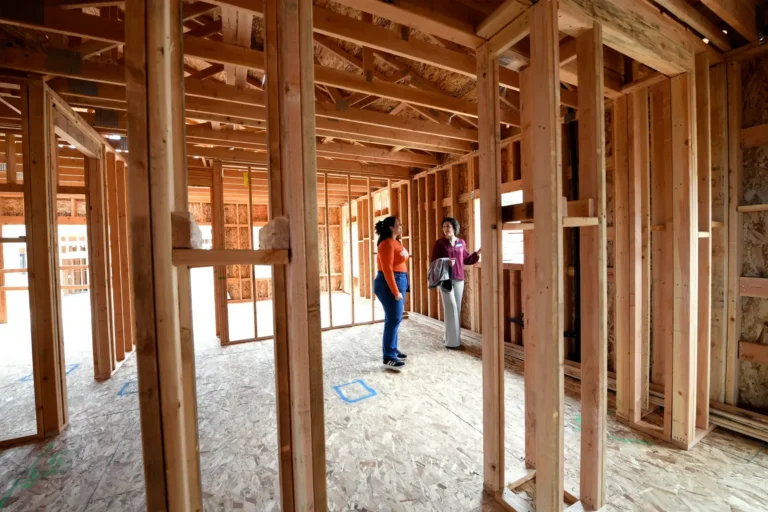
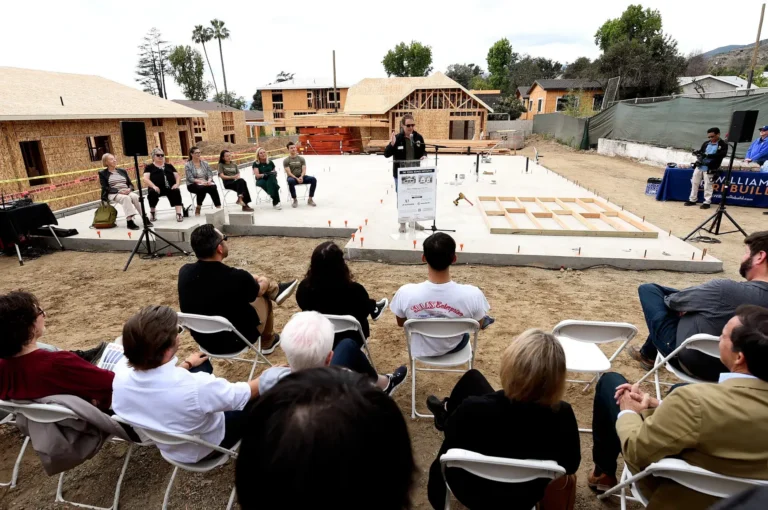
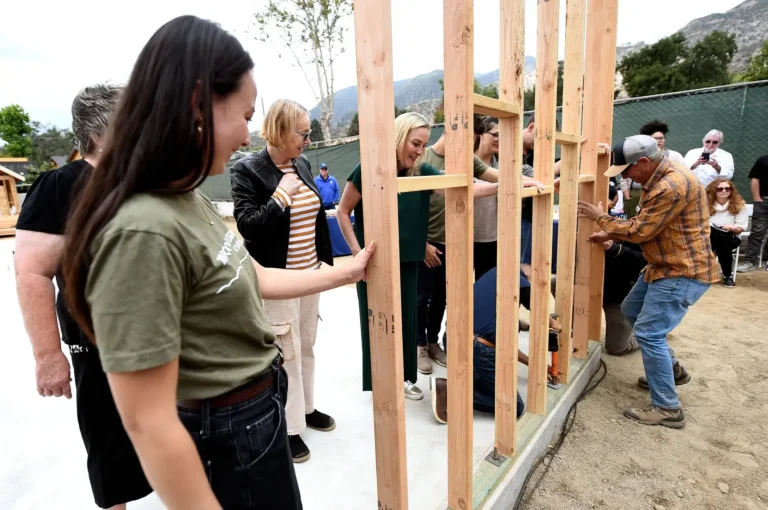
The initiative, anchored by the home demonstration sites on Tonia Avenue, have been billed as “living case studies” for rebuilding, which can serve as an education resource for fire-impacted families looking to rebuild.
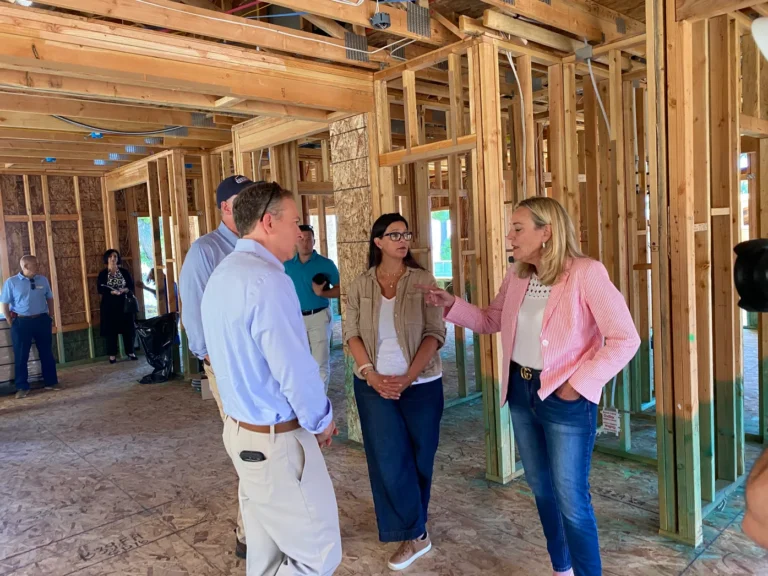
Friday’s event was an introduction of sorts, where leaders touted the Tonia Homes as a hub where residents can explore and walk through architectural plans, rebuild timelines, permitting pathways, ADU solutions and other key rebuild information — all on an active construction site of two Tonia Avenue homes taken from the pages of The Foothill Catalog.
The Catalog offers several pre-approved home designs, inspired by the architectural spirit of older designs pre-fire.
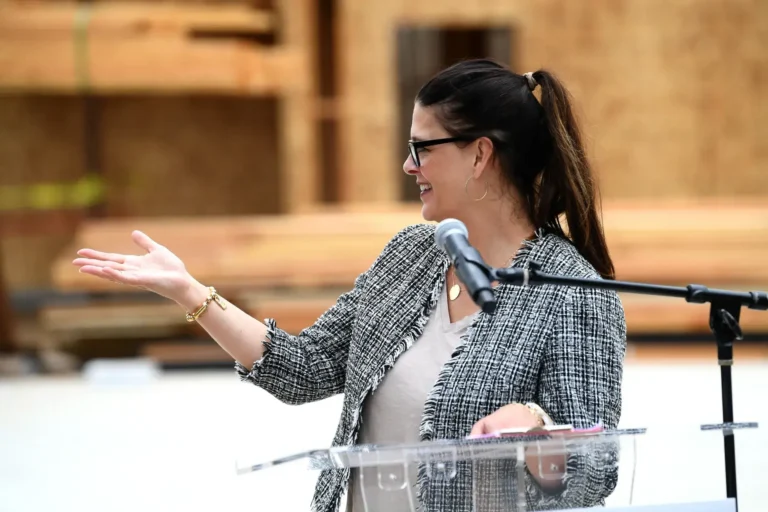
According to Foothill Catalog Foundation’s Project Architect Cynthia Sigler, through partnership with Los Angeles County and Supervisor Kathryn Barger’s office, the collaborative was able to streamline fire survivors’ design and permitting processes through pre-approved plans.
While Barger said that normally, non-Foothill Catalog permits could take over nine months to be approved, according to Williams Rebuild President Daniel Faina, catalog permits get approved by the county in about 30 days, with some having been approved in less than a week.
Design, permitting and construction can be one of the most complicated processes to navigate, especially after the most traumatic experience of a person’s life. These demonstration homes allow fire survivors to learn from … completed homes at full scale.
Sigler
With a collection of 24 single-unit family homes, two multi-units, nine accessory dwelling units, three garages and two carports, the catalog was developed to reflect Altadena’s pre-fire historical facade. Each construct also meets the state’s Very High Fire Hazard Severity Zone requirements.
According to Tonia Homes Initiative representatives, the Elizabeth and Lexington designs showcased to survivors are estimated at $200,000 to 250,000 less for families because projects pass the permitting process more quickly.
Denise Hamilton, a 29-year Altadena resident who lost her accessory dwelling, bought the Mariposa and the Dahlia – two projects she said was a “huge lift of burden” after initially feeling lost about the costs and processes of rebuilding.
“I didn’t know how to find an architect, how to vet them, how much it was going to cost,” Hamilton said. “I feel very grateful that I’m able to do this. I know a lot of people are still looking around for help and I keep advising them, ‘Check out Foothill Catalog.’”
According to Hamilton, she expects the Mariposa to be finished next February.
“There is a way to streamline rebuilding,” Barger said. “The fight is against insurance companies – making sure that the survivors are not victimized by insurance companies that are not paying [survivors] what they are owed.”
The initiative marks the start of the collaboration’s first of four workshops happening each month from May to August, where step by step, survivors workshop and learn the home-building process.
Barger said she and L.A. Mayor Karen Bass have traveled to the Capitol for potential federal government support: a potential loan program, although Barger clarified that grants would be better-suited for survivors, agreeing with survivors’ sentiments of predatory loaning practices.
“I believe that grants are more realistic, because a loan for a lot of these people, they don’t want to hand out,” Barger said. “At the same time, they know that with a loan comes the need to repay it, and they’re just trying to get out of the hole.”
Jose Madera, the director of Pasadena Community Jobs Center and a member of Dena Rise Up, thanked Barger for her and other state officials’ support in pushing legislation supporting fire survivors in recovering partial and full insurance claims.
Although still in progress, state Sen. Sasha Renee Perez’s SB 878 would require insurers to pay accrued interest for insured structures if payments are not made within 30 calendar days.
Survivors are also looking toward state Sen. Ben Allen’s SB 1301 and Assemblymember John Harabedian’s AB 1642.
Under the in-progress SB 1301, if an insurer needs to issue a notice of nonrenewal, a notice of reduction of limits or elimination of coverage, they would also need to provide policyholders 90 days or more to perform necessary remediation or other changes to the property, or to provide additional information. For the in-progress AB 1642, the Department of Toxic Substances Control would adopt emergency regulations for lead and asbestos removal in residential areas after a wildfire.
But, emphasizing that more can be done from officials to aid in fire recovery, Madera and others have urged transparency and accountability for the spending of a $2.5 billion statewide wildfire relief package, which state officials said is being used to reimburse the federal government for FEMA payments.
Madera said Newsom could provide direct relief to survivors through grant money from the state’s general fund.
According to an L.A. wildfire response and recovery expenditure report updated by the California Department of Finance as of February, around $500 million had been allocated toward dozens of state agencies aiding in recovery, such as the Department of Toxic Substances Control and the Office of Emergency Services. The report listed remaining balances of more than $900 million in one control section and $1 billion in another.
In response to the survivors earlier this month, a statement from a spokesperson for the governor, said the $2.5 billion authorized in January 2025 was designated to cover the state’s share of FEMA reimbursements, which are drawn down over years as the federal government processes claims.
Of the $2.5 billion package, 60% of the initial $1.5-billion portion designated for fire relief – roughly $895-million – reportedly remained unused.
Dozens of Altadena and Pasadena survivors recently travelled to Sacramento by bus to lobby Newsom’s office into providing them with grant funding needed for urgent temporary housing as survivors face homelessness and housing insecurity.
“When the fires happened and the Governor’s office mentioned [Newsom] would support the rebuilding […] many of the families have not seen that support,” Madera said.
Earlier in the month, Newsom announced that more than 1,000 survivors would receive CalAssist grants and CalAssist would expand up to $100,000 in mortgage payments over 12 months – something survivors say is a step forward.
But according to Madera, part of the solution is for Newsom to hold Southern California Edison accountable by initially distributing grant money and later reimbursing themselves through the $21 billion Wildfire Relief Fund.
“There’s a big gap in funding, where families don’t know where they’re going to move or live as the insurance comes for them to rebuild,” Madera said. “Families do not want loans. They don’t need more debt — they need funding to build their homes. This fire wasn’t their fault, and they need the state and the Governor to support them in rebuilding.”
Source
This article is based on reporting from Pasadena Star News:
“In Altadena, a Tonia Ave. construction site becomes learning hub for rebuilding”
Published May 30, 2026
https://www.pasadenastarnews.com/2026/05/30/in-altadena-a-tonia-ave-construction-site-becomes-learning-hub-for-rebuilding